RÅTE: What is it really like to live?
November 4, 2024
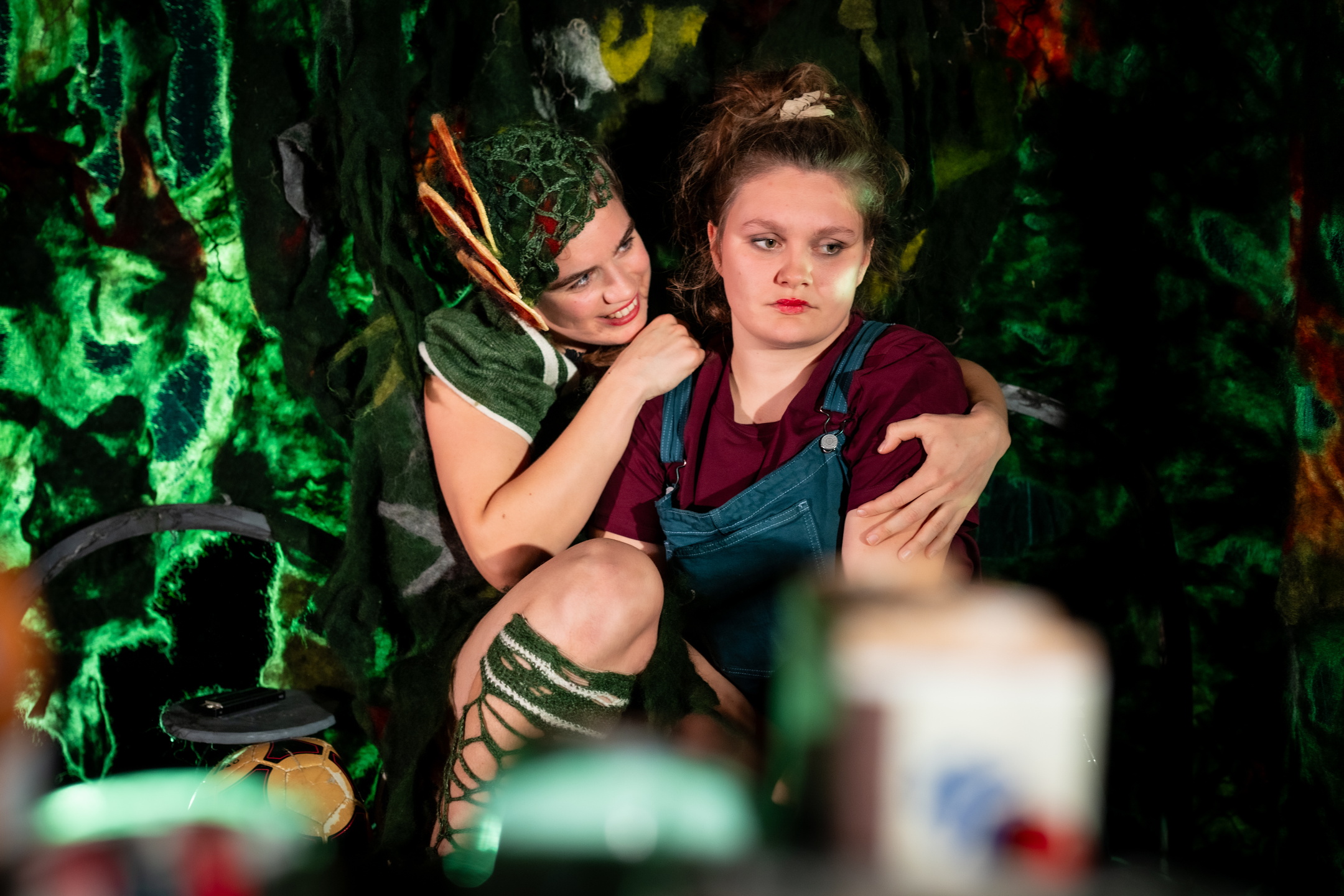
- I like to think of it as a coming-of-age story. Here, the main character is an adult, but she still develops from living as she did when she was a child to entering the adult world.
In collaboration with Unge Viken Theatre, the show Kloden theatre performance RÅTE at Bjerke High School this week. The performance was written by Astrid Berg Hauge (26) through the debutant program Ung Tekst, and addresses not daring to enter adulthood, and being afraid of change.
According to Unge Viken Teater, youth audiences will tune out if they are served theater about mental health in a way that says, "now we're going to talk about what's problematic in life". RÅTE deals with isolation, grief and being afraid of change without flagging it as a problem. The performance has already received good feedback:
"In her debut, playwright Astrid Berg Hauge has already understood how to tighten up situations and still manage to write universally. You don't have to share experiences with Lille to recognize yourself in the performance. And that is very impressive for a young playwright. " - Cornelius C. Steinkjer, Periskop
We had a chat with Astrid Berg Hauge and Artistic Director at Unge Viken Teater, Kari Ramnefjell, about the performance.
Can you tell us about the performance RÅTE, Astrid?
- RÅTE is about the character Lille, who has shut herself away in her childhood home. Even though she's an adult, she lives in her home in the same way as when she was a child, with imaginary friends and a slight fear of her neighbor, among other things. It's as if the world of adulthood hasn't quite sunk in with Lille. One day a new neighbor arrives and she starts spying on him over the hedge. In connection with this, her sister turns up. Her sister died when she was 13 years old, so she appears in the form of a kind of ghost. Together they begin to explore life, and Lille does all the "first time" things that she hasn't gotten to do yet, like drinking alcohol and experiencing her first kiss. I like to think of it as a coming-of-age story. Here, the main character is an adult, but she still develops from living as a child to entering the adult world," says Astrid.
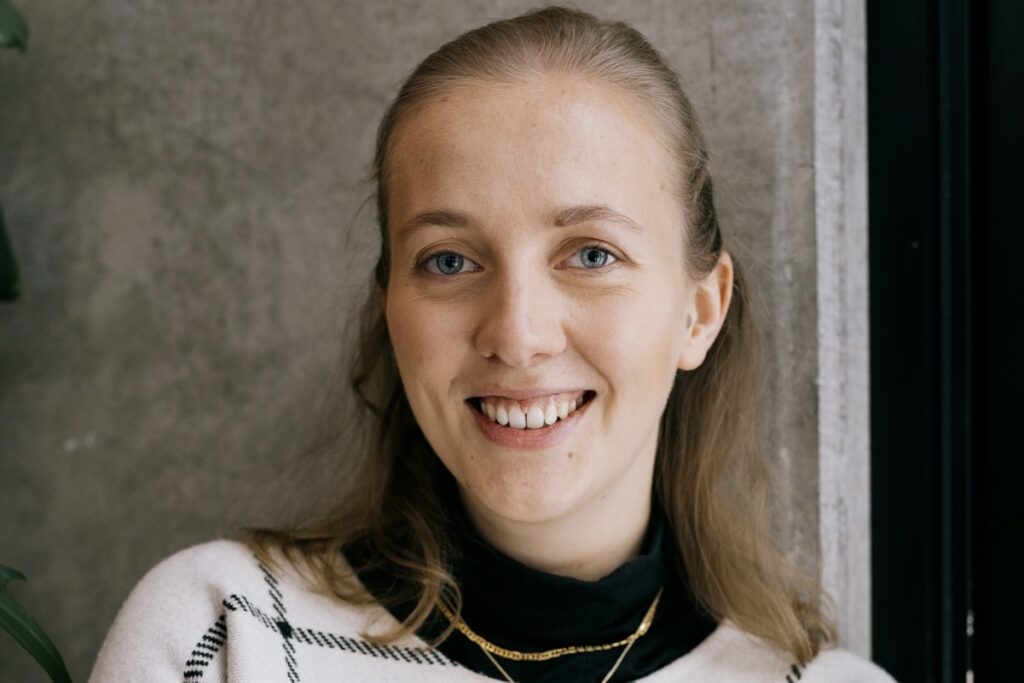
Photo by Astrid Berg Hauge: Julie Hrnčířová
The text RÅTE was selected from several scripts in collaboration with young people from the drama program at Lillestrøm upper secondary school. What was it that made it stand out, Kari?
- The text is developed through Ung Tekst, which is a program for young playwrights. We select one script a year that we put on a full-scale production. Astrid's text stood out early on, before the script was finished. Initially, we wondered whether this text was too "adult" for the target group, which is young adults. We did some blind tests on a group of young people who were presented with it. In short, it's about being afraid of change and not daring to face the outside world, but rather getting stuck in your own inner and outer self. From the first time I read the text, there was something fascinating about the woman or girl who has reached a point in her life where she is in her own prison and experiences the world through Gilbert the crow, from whom she receives information from the outside," says Kari, and adds:
It can be compared to only being aware of what is happening through social media, and that the perception of reality happens through social platforms.
- Kari Ramnefjell
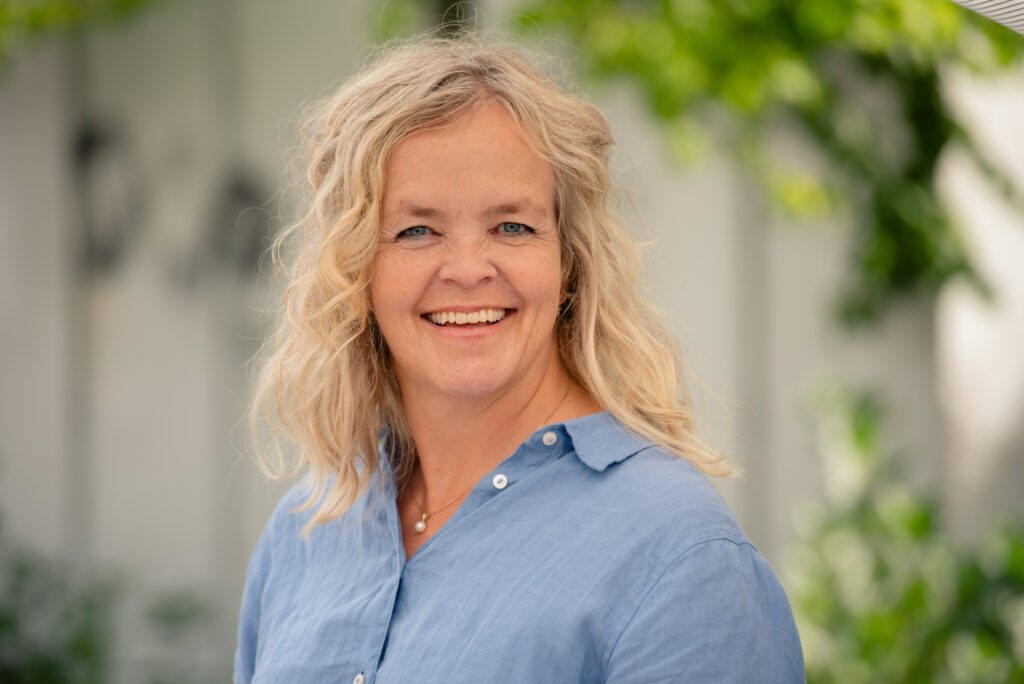
Photo by Kari Ramnefjell: Nicolas Tourrenc
- We presented the text to pupils from upper secondary school and many of them recognized it, which was interesting. The main character was originally supposed to be a woman of 50 plus, but we removed that when the young people reported back that they recognized themselves," says Kari.
What makes a life worth living
What inspired you to write the text, Astrid?
- I've had several approaches to the text, and it's an idea that's been muttering for quite some time. I think a lot of it had to do with the fear we experienced during COVID-19 when the outside world became so dangerous for real. We experienced a kind of collective social anxiety. So I wondered; what is it like to live in a world like that all the time? And what are the consequences of being alone for a long time, in fear of the world and other people? And what is it really like to live? Because Lille is actually quite happy with her little life. At least she thinks so," says Astrid.
How do you see isolation playing out among young people in general?
- "I think isolation plays itself out in the fact that we can't quite reach each other. When something is difficult, we pick up the cell phone. If we're on the bus and see someone we know a little, we pick up the phone instead of being forced into a conversation. Screens help to separate us. In addition, we are bombarded with the idea that there is a crisis and that we never do enough. We feel ashamed of being ourselves," says Astrid.
I want to go back to the idea that close relationships are enough. A lot is made of the big crises, but I think it's at least as important that we get to experience things on a micro level. Being able to mirror ourselves in other people's lives and in that way get closer to each other.
- Astrid Berge Hauge
How can theater contribute positively to mental health among young people, Kari?
- In theater, you are both close and intimate, but at the same time have a distance to something that is happening there and then. We can open up a world where young people can feel less alone. I see addressing mental health in theater as an important responsibility. Theater is a unique tool for reaching young people in a safe way, but many are tired of seeing performances that are "only" about mental health. Young people report back that if they are served a theme that is about mental health in a way that says, "now we're going to talk about what's problematic in life", they tune out a bit. One of the nice things about Astrid's text is that it has a more subtle approach to the theme. Astrid deals with isolation, grief and being afraid of change without flagging it as a problem. The story is framed with very interesting characters, and there's also a lot of humor that creates a nice balance," says Kari.
A child in an adult body
Do you recognize yourself in the main character, Astrid, and if so, in what way?
- Yes, absolutely. I started writing this when I was 22, now I'm 26. It's one of those phases where you go from being a child to being an adult without quite knowing how to take this childhood and influence yourself as an adult. Many people I talk to recognize this, and it seems that at some point we all feel like children thrown into something we don't know how to handle. As a young adult, there's a lot to go through. Childhood can feel like a burden going into adulthood. We become afraid of making adult choices and can feel like children in an adult body," says Astrid.
- "I think everyone who sees the show will recognize themselves. There are so many layers, and it's resolved in an incredibly nice way," Kari adds.
What do you hope the audience leaves with after seeing the show, Astrid?
- I hope that the audience can feel some form of comfort and hope, and that they have had a good experience. That they are not left discouraged or afraid, but with a belief that we will endure life even though it can be difficult. We can get out of the garden and into life together," says Astrid.
Photo top: Lars Opstad