Julian Karenga: - Theater has made me freer
August 29, 2023
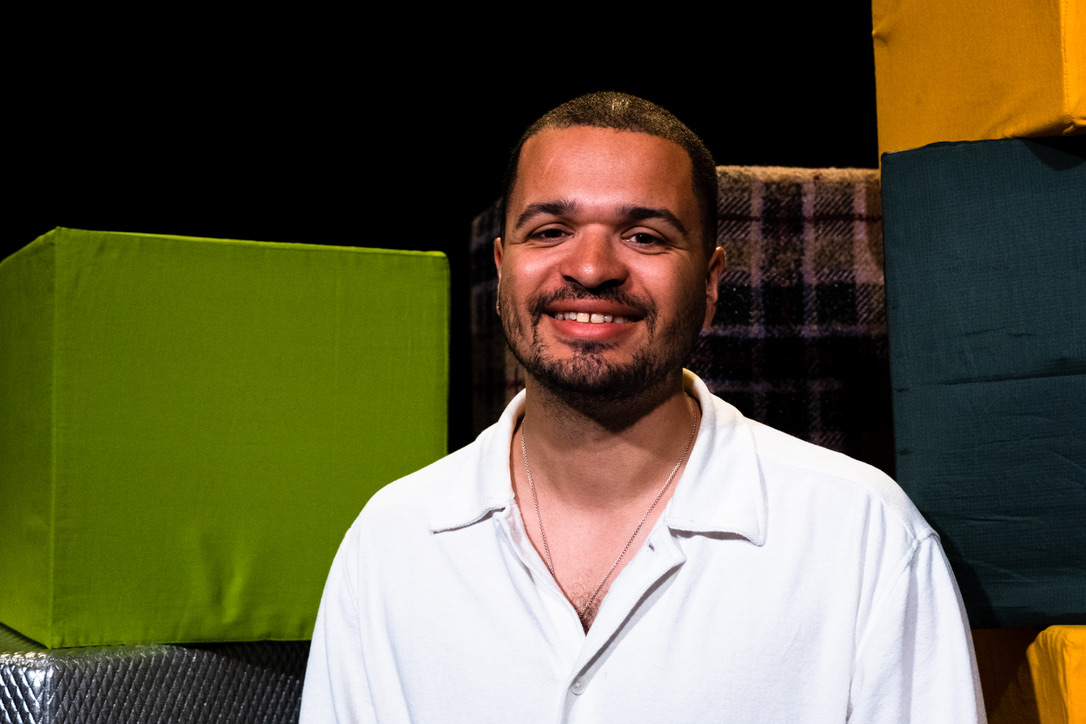
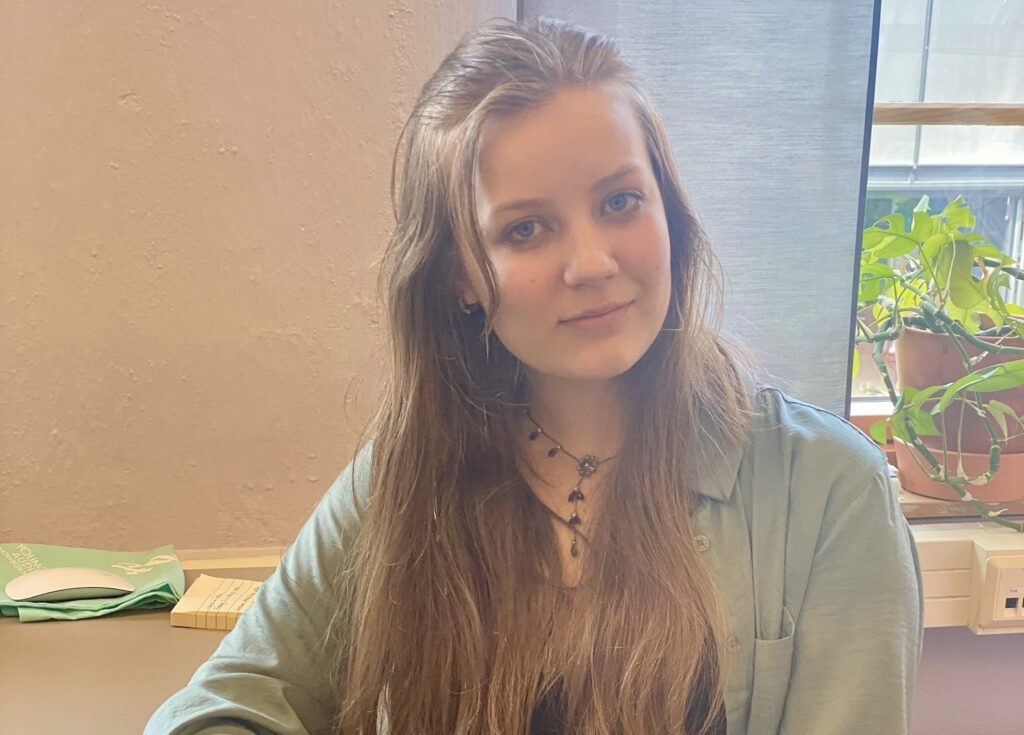
When Matilde Landlie (14) from Bergen was on a work week at Kloden Teater this spring, she interviewed director and playwright Julian Karenga (28). He is currently working on the play "Veien sitt ansikt" at Kloden Teater. Read about how Karenga deals with writer's block, what motivates him and what tips he has for young people who want to write more.
Text and interview: Mathilde Landlie
I have been on a work week at Kloden theatre, and has been able to take part in their new EU project, Performing arts as the Third place for the young audience. The Third place project is supported by Creative Europe. It will last three years, and the Norwegian organizations involved are Scenekunstbruket and Kloden theater.
In the project, they will investigate how theater can become a place for young people, a place where you feel at home and see yourself represented. "A third place" means the place that is outside of home (first place) and school/work (second place). It is the place you choose to go to or be in, and that you enjoy being in. It can be both with others or somewhere you are alone.
With this project in mind, I interviewed director and playwright Julian Karenga. He is a trained actor, but works both behind and in front of the curtain. Julian has had two productions of his own, Demir (2021) and Snøbrun (2021) , and is currently working on a new project: The Face of the Road.
What's your third place?
- That's a good question. The idea of what a third place is matches what writing is for me. The solution if I need to think, if I'm having a bad day, is to write. My third place is probably in writing.
Would you say that theater and writing have been a big part of your life growing up?
- Yes, I do. I went to Steiner School when I was growing up. And at times in my life when I was trying to find what I wanted in life, I often came back to that moment when I did a revue in seventh grade, when I felt secure. I felt an incredible freedom on stage.
Have you experienced writer's block and what do you do when it happens?
- I move and maybe go for a walk. It helps a lot to change my surroundings. Or I try to lower the threshold for writing. If I just sit at my computer and write, it can quickly seem a bit impossible. So I'd rather sit in the living room with my phone or notebooks. I have many notebooks, and I often switch which one I use. If that doesn't work either, I set a timer for 5-10 minutes and sit down at the computer and don't let my fingers leave the keyboard during that time. This forces me to think less critically and hopefully work more intuitively.
What about young people who want to work in theater?
- It's important to see a lot of theater, keep up to date on what's happening in the theater and talk to people about what you've seen - whether they like the show or not. The question should always be why was something good/bad? The answer to this - whatever it is - will always be the most interesting.
- You should keep your eyes open and focus on things like writing courses and talent initiatives. You can also sign up for Den Unge Scene or Ung Kultur Møtes. The more you get into all this, the more you get a taste of different environments. I think that for too many actors and young people, theater can seem like a closed box that's hard to get into.
As a theater professional, what will you do to open this box and make it more accessible?
- To reach young people, I try to answer why theater seemed inaccessible to me when I was young myself. Theater may seem like it belongs to the upper middle class, but I want to reach everyone. To break this barrier between classes. To remember what it was like as a youth, I talk to my teenage self often, on an almost subconscious level. I want to remove the thoughts and stereotypes that theater is full of prestige and jellies, and hope that I can make theater more accessible. I also address themes that I feel are under-communicated. I often write about taboos and other things that aren't talked about much. Because that's what I think we need more of on stage.
Do you feel your productions can become personal and revealing?
- Both yes and no. It becomes a bit personal because I base it on my own life; events or environments, experiences and adventures I've had. I don't feel that it becomes revealing, but I'm constantly working in a process where I try to focus on the right place. I find that if you talk a lot about where the material comes from, and that it's based on true stories, it takes the focus away from the art.
Finally, do you have any tips for young people who want to write more?
- It's important to write to yourself. Just writing in a diary is good, and it's important to retain the valuable freedom that comes from writing to yourself. Writing is a mass training thing, you have to write a lot to get good at it. You have to put in the effort! Also remember that writing is like a life partner. You will always have the writing.
"The Face of the Road" can be experienced during Oslo Culture Night on Friday, September 15 at 19:00, and Saturday, September 16 at 19:00.