deWangen productions occupy Østre Aker Church
October 15, 2026
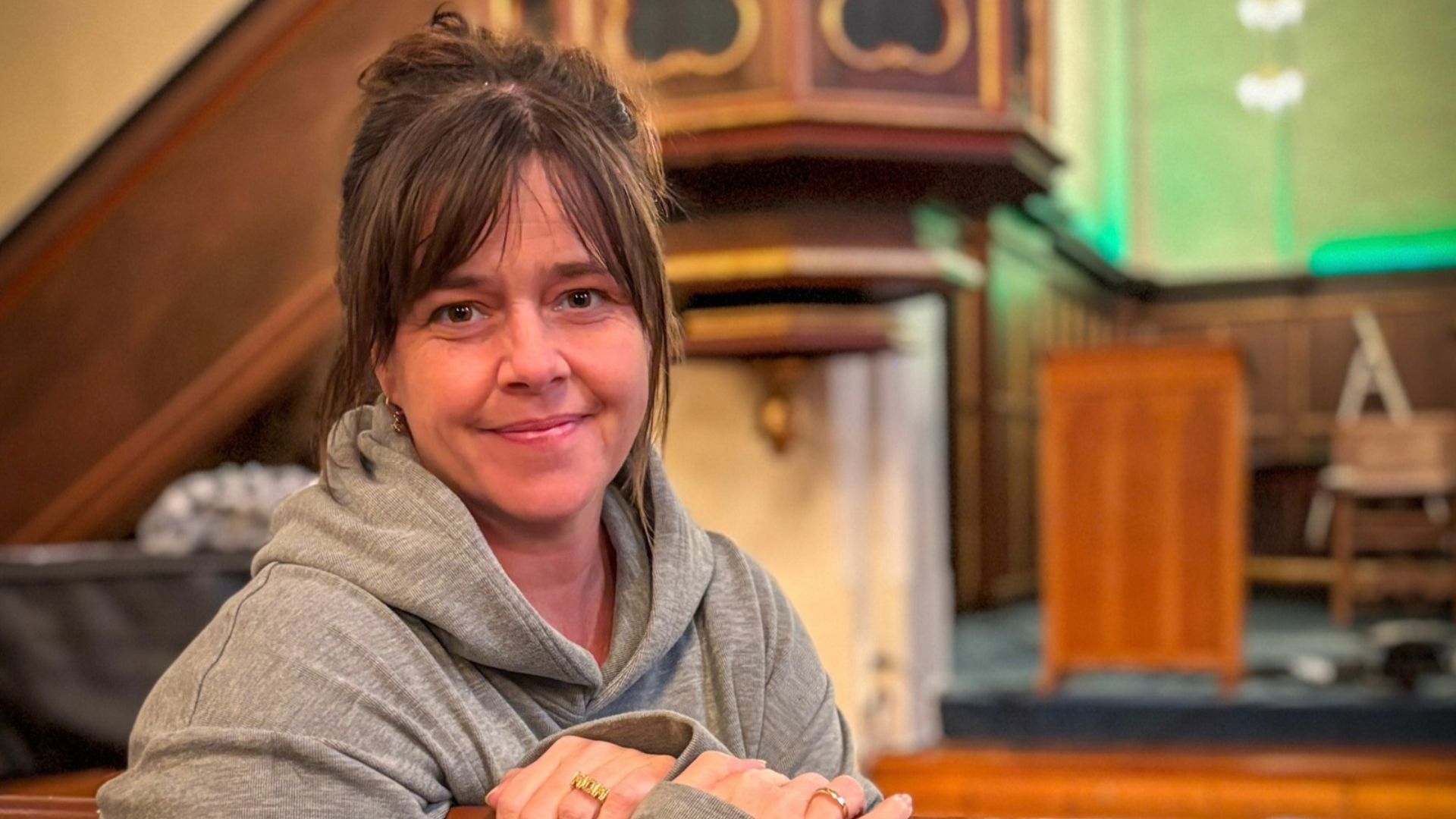
When the place becomes the story
For director and artistic director Claire deWangen, the location is more than a frame for a performance. It is the very starting point for the story. In Croquemort, the audience is invited into Østre Aker Church to participate as extras in a staged funeral in a space where reality and theater blend into each other.
Through her work with de Wangen productions, Claire de Wangen has explored the intersection of place, audience and performing arts. It is the discovery of how a place can become a performance that drives her.
– My path into the performing arts and through all the projects I have done has been about the site-specific. It has been about the encounter between place and audience, place and performing arts.
When the company embarks on a new project, the work begins with researching the location and how it can be experienced in new ways.
– I find it always exciting to discover a place with an eye for how the place can become a performance.
For de Wangen, site-specific theatre is about letting the place itself shape the narrative, rather than placing a finished story in a specific building or landscape.
– Site-specific theatre is about using the place as the primary source for the experience you want to create. Theatre is a live experience, being in a place with your body, and preferably with others, is an immediate physical thing.
She describes the work as a process where the site's own elements become part of the artistic expression.
– And for me, working with site-specific theatre is about transforming the place itself into the story itself. Rather than putting the story into a specific place, it is elements from the place that become the ingredients of what the story ends up being.
A cemetery in the heart of the city
The idea for Croquemort has been with the company for a long time. The cemetery interests de Wangen because it is a place that most people have a personal relationship with, while at the same time it contains questions that concern us all.
– It is actually a symbolic place for the final resting place, but it is also a place for reflection on what awaits us all.
The cemetery contains both the eternal and the ever-changing. New people are buried, and rituals and traditions develop. In working on the performance, the company has examined the funeral as a ritual and how people try to create meaning around death.
– And in this ritual that is the funeral, we are first and foremost left with the incomprehensible, but naked truth: And that is that we are not allowed to live forever.
The choice fell on Østre Aker Church and Cemetery in Oslo. For de Wangen, the contrast between the peace of the cemetery and the bustling city around it is an important part of the place's story.
– The place was once incredibly beautiful on a hill above Oslo, with fields all around. Today the place is like a small oasis with little hope of being a quiet place, but it is now located between two of Norway's largest main arteries.
Here, the city's growth and pace meet the church space, a place that has held hope, prayer, sorrow and anger for generations.
– This place is located in the middle of the chaos of the city and Østre Aker Church and the cemetery are located in a place that very clearly shows the growth and development of Oslo. The place tells something about the passing of time and the city that pulsates and does not care that we will die and the universe that does not care that people are perishable.
When reality and theater meet
In Croquemort , the audience is invited into the church room as extras in a funeral filmed on location. This creates multiple layers in the performance: the real church and cemetery, which are still used for people's own rituals, and the staged action that the company creates.
– We have chosen a layer that is the real church, with its real cemetery, where people work and people use the church as a space for their rituals, and then we add a layer on top where we invent some new rituals and find a new way to be an audience in such a place.
It is in the encounter between the real and the fictional that something new can arise. The audience becomes part of the place and the action, while experiencing how familiar surroundings can take on a different meaning.
– And I find it exciting to work with those places where an imagined reality and a real reality meet in the audience meeting. So we get a conversation between the place and the audience, but in a different way than we usually meet in this space.
For de Wangen, this conversation begins as soon as the audience shows up. Participating in a performance requires trust, and in Croquemort the audience's physical presence becomes particularly important.
– The audience that comes to the theater has come here with their bodies. I think that's already fantastic.
She describes the meeting between audience and company as a mutual act: They have something they want to share, and the audience makes their presence available.
– We have something we want to share, and the audience wants to share their presence with us. And in that meeting we are already in a conversation about what is staged and what is reality.
Collaboration with Kloden Theatre
“DeWangen productions have experience in creating performances for young people, and like to work with age and perspective-specific elements,” says Claire de Wangen. We are excited about the collaboration with Kloden theatre, which has making performing arts accessible to young people as a core mission. Together we want to create a performance that opens a new space for young people to explore death.
The certainty that everyone will die does not belong to any particular generation. How we relate to death, give it space and space, and how this changes throughout life are questions we will never finish asking.
DeWangen Productions is an Oslo-based theatre company, founded in 2001.
The company develops and produces new, original works, with an emphasis on bold, atmospheric and immersive performances. DeWangen productions are deeply committed to exploring the audience's experiential relationship to place, history and encounters.
At the core of the varied star storms are Claire de Wangen and Morten Bendiksen.