Guro Sibeko makes her theater debut: Sold out in 24 hours
July 1, 2024
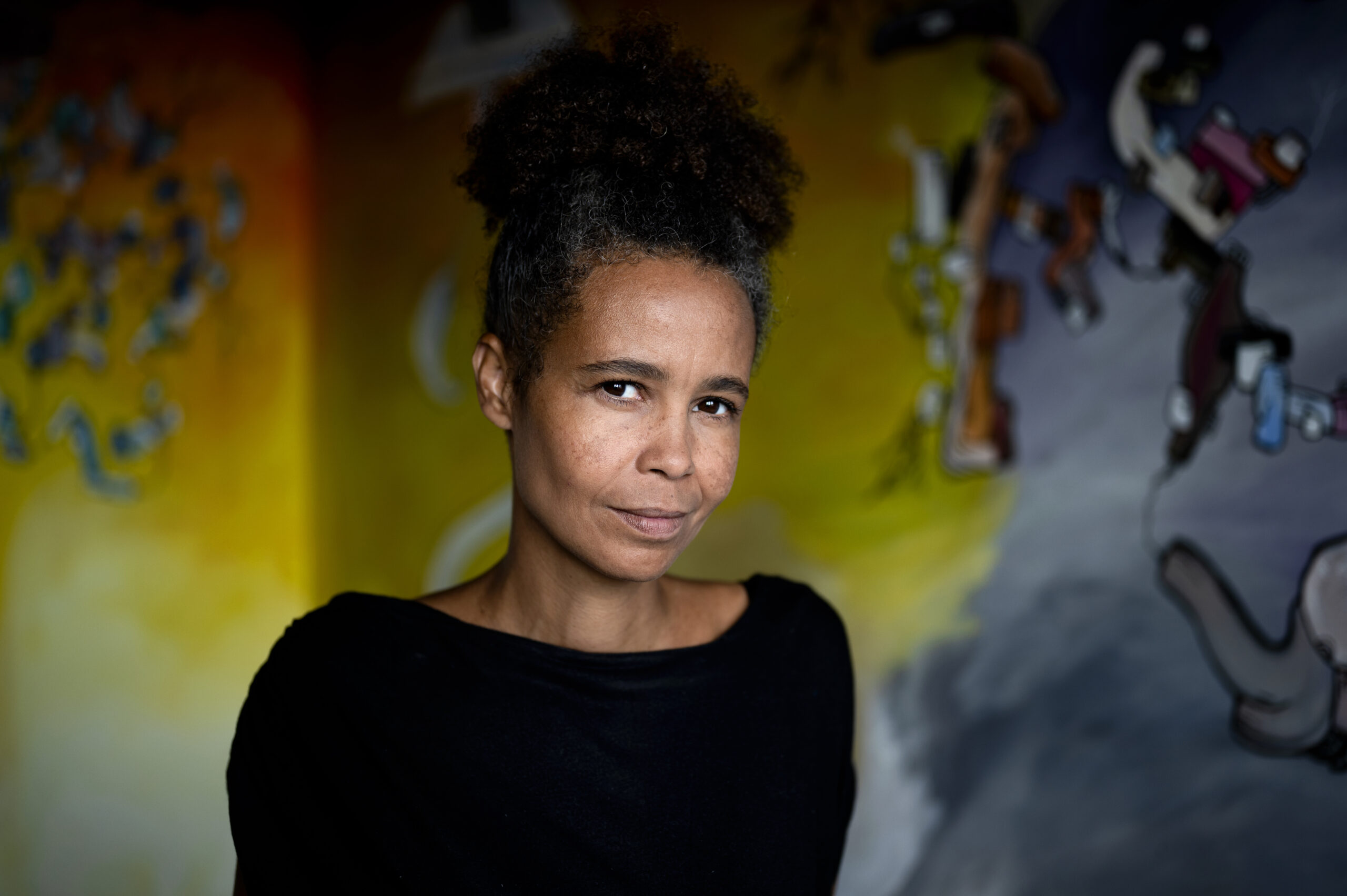
- I've never worked in theater before, so I'm not going to say it's true. But I had a suspicion that it's in the free field that you can do the funniest things.
In the performance "Ubuntu", Sibeko explores how structural powerlessness, in this case racism, can in some situations become individual power. "The tickets for the ordinary rehearsal were sold out in less than 24 hours, and we have set up an extra performance.
- It's very scary that people want to see the result. Fortunately, I work with talented people, so I think this will go well," says Sibeko.
We talked to her about the play and the process of creating it.
Can you tell us about Ubuntu and what you want with this piece?
- Ubuntu is about racial prejudice and confusion. For example, people mistake people with melanin all the time, and you get compliments on each other's work in many strange settings. This doesn't just happen on the street, but also in your own workplace. I explore how you can use the prejudices and confusions for your own gain when you get the opportunity. I also explore how far strategies can be stretched, and thematize how structural powerlessness, in this case racism, can in some situations become individual power. How can you use racism to your advantage in certain situations as an individual? In addition, I try to write something funny. That's very nice for me, since I mostly write angry and educational texts. Ubuntu isn't educational or angry, I've just had fun while writing.
What is the action?
- We meet three girlfriends who grew up in Norway with parents from the African liberation struggle, their daughters and two of their political and musical role models. We also meet some police officers, journalists and the like. These seven people have different perceptions of what is morally acceptable and reasonable behavior, and they relate differently to violence and private property rights, to law enforcement and truth. One of the clashes that arises between the generations is about how to create a good narrative. Those who grew up in Norway and the West envision a hero, while the older generation finds the concept of the lone hero saving the world absurd and an expression of a type of Western capitalist mindset that they don't have to relate to since they operate as a collective. They have Ubuntu, the philosophical idea that I am because you are. I don't quite agree with these old people, but this is the old people's point of view, and in this particular discussion they are winning. Then we'll see the result of it.
What has the writing process been like?
- Belinda Braza, who works at the Norwegian Theatre, contacted me and asked if I had considered writing for the stage. I hadn't, so it was a bit like Pippi saying "I've never done that before, so I don't know if I can", and "but it's much easier if you get a trumpet", or in my case; get a writing assignment. I got a writing grant from Dramatikkens hus and Det Norske Teatret, and then I started writing. It's probably the most fun thing I've ever done. Really super fun and delicious. I've actually written stage texts before, but they've been texts I'm going to perform myself. It's so liberating not to be limited by myself, that I don't have to be able to do everything I write, that there are good actors who can do all these things and I just need to write it down. I've also had a small process with The Norwegian Theatre, which ended up with them not wanting to stage the play (at the time at least). There were a number of things in the process that were a bit like the publishing industry for me, and I have a lot of experience of that. That's one reason why I've chosen to self-publish my latest books. I feel that I provide better quality when I work through a freer and easier process, and that I get more out with things then than if I use the big, heavy publishing structures. I've never worked with theater before, so I'm not going to say that it's like that on the theater front as well, but I had a suspicion about it, that it's in the free field that you can do the funniest things. Then, as usual, things got in the way and I put it all aside until Rania Broud got in touch and wanted to collaborate. We've now received support for a pilot project from Fritt Ord, Dramatikkens Hus and the Arts Council. We're very grateful for that.

How has your background in slam poetry influenced the process?
- I use a lot of slam in this text, and many of the same techniques. There's a lot of rhyme and rhythm. Slam is an immediate poetic form where you have to use tools that are easy to understand, unlike when you write texts that people can read as many times as they like. I use a lot of the same slam devices in this text, and it's very exciting to explore this in a polyphonic form. I'm used to writing for myself, as I'm usually the one who has to perform the texts alone. I've done something polyphonic with another poet before, but here we have nine voices, and working with that has been really, really fun.
Who or what inspires you?
- My biggest inspiration is the collection of extremely talented, melanin-rich artists that have popped up over the last 10, 20, even 30 years, and the conversations I've had with them. The discussion that goes on in those rooms is perhaps what I've been most inspired by.
Who is the target audience for Ubuntu, and what do you want them to leave with?
- "I think the target audience is all young adults and upwards. It's not a performance that's suitable for children. I want the audience to be left both entertained and optimistic, but perhaps also with a greater understanding of this issue of structural powerlessness and individual power. This applies not only to racism, but to all marginalized groups. We, too, move between power and powerlessness, and all structures can potentially be exploited by all individuals.
How did you come up with the show's title, Ubuntu?
- It's a working show and a working title. It's not the first working title either, it was; Fifty Shades Foundation, as a makeup theft is an important part of the show. Ubuntu is a philosophical concept, which is about you being because I am, that we humans are connected in ways that make your success my success. I grew up with the word Ubuntu, the closest translation might be humanity, that to say that someone does not have Ubuntu is to say that someone is not human, that you are an inhuman. There are some people without Ubuntu in this text too.
Have you received help from others?
- I certainly have. I've had a lot of help from the playwrights Oda Radoor and Ingrid Weme Nilsen, and I've done two readings at the Norwegian Theatre with actors from there. This has been a great help. It was nice to see the text brought to life, but at the same time it was very... It was with employees at the Norwegian Theatre, and they are mostly white. It became very clear how difficult and sometimes impossible it is when the text is so much about not being white.
Tickets for the rehearsal performance have been selling like hot cakes, what do you think about that?
- It's really quite absurd. It's not a work yet, it's a preliminary project that hasn't been completed, and I thought "all right, Økern on July 11, we'll probably be able to bring five or ten people up to see it and maybe give some feedback", but then we sold out in less than 24 hours and set up an extra screening. The fact that we had to put tickets out at all because we realized that people actually wanted to see this was absurd in itself. Now we have the opportunity to have a screening, get feedback and make adjustments, and then have another screening. It's absolutely wonderful, it's so useful. But it's also scary, because it's not a performance, it's a working screening. This is my very first work for the stage and it's very scary that people want to see the result. Fortunately, I'm working with talented people, so I think this will be fine.
Photo by Guro Sibeko: Siv Dolmen